Short, sourced notes on why coatings fail, what the standards actually say, and how the chemistry works. Steel, concrete, wood and more.
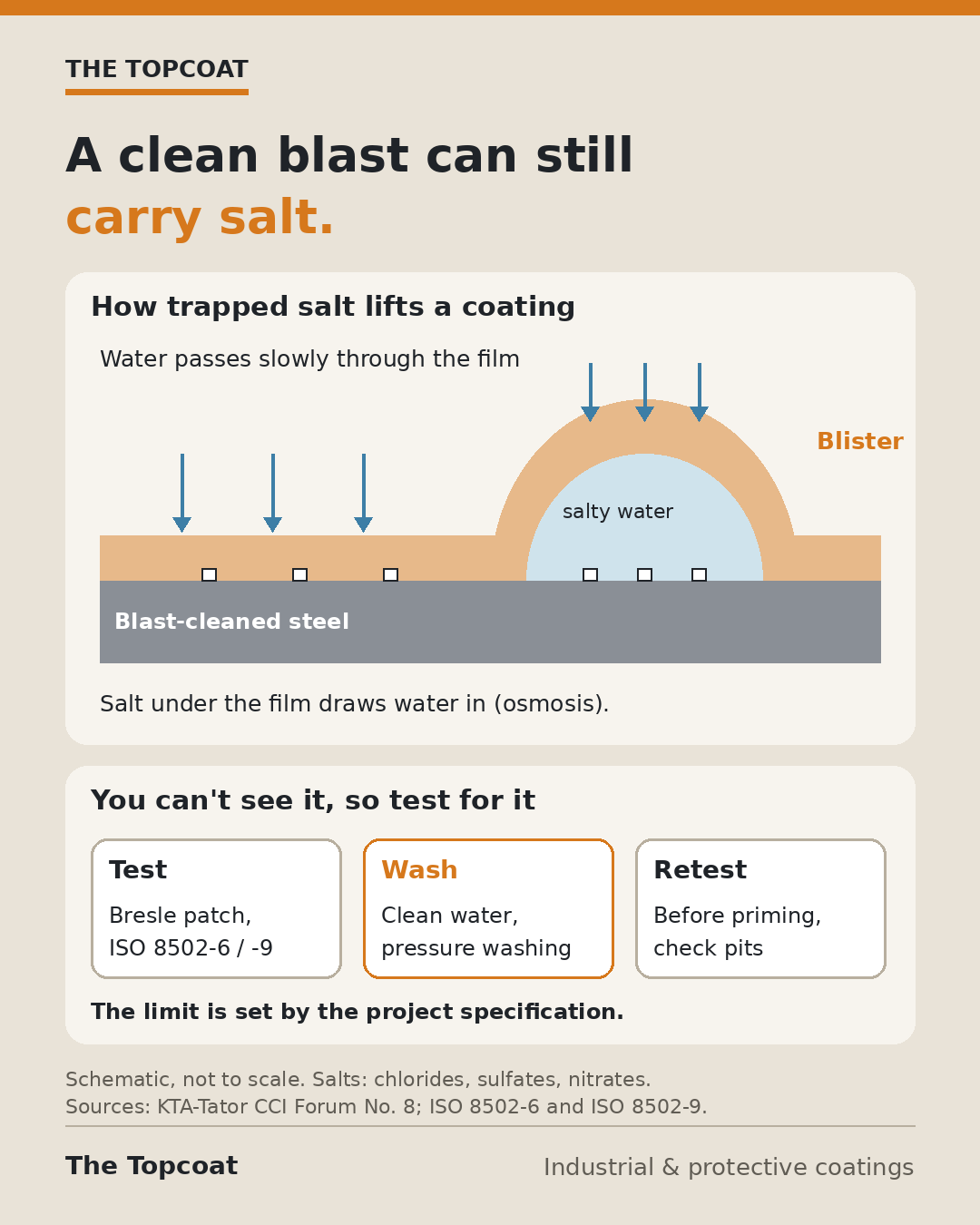
Blast-cleaned steel can look perfect: an even grey profile, no rust, no dust. The coating goes on to spec. A year later the surface is covered in blisters. Break one…
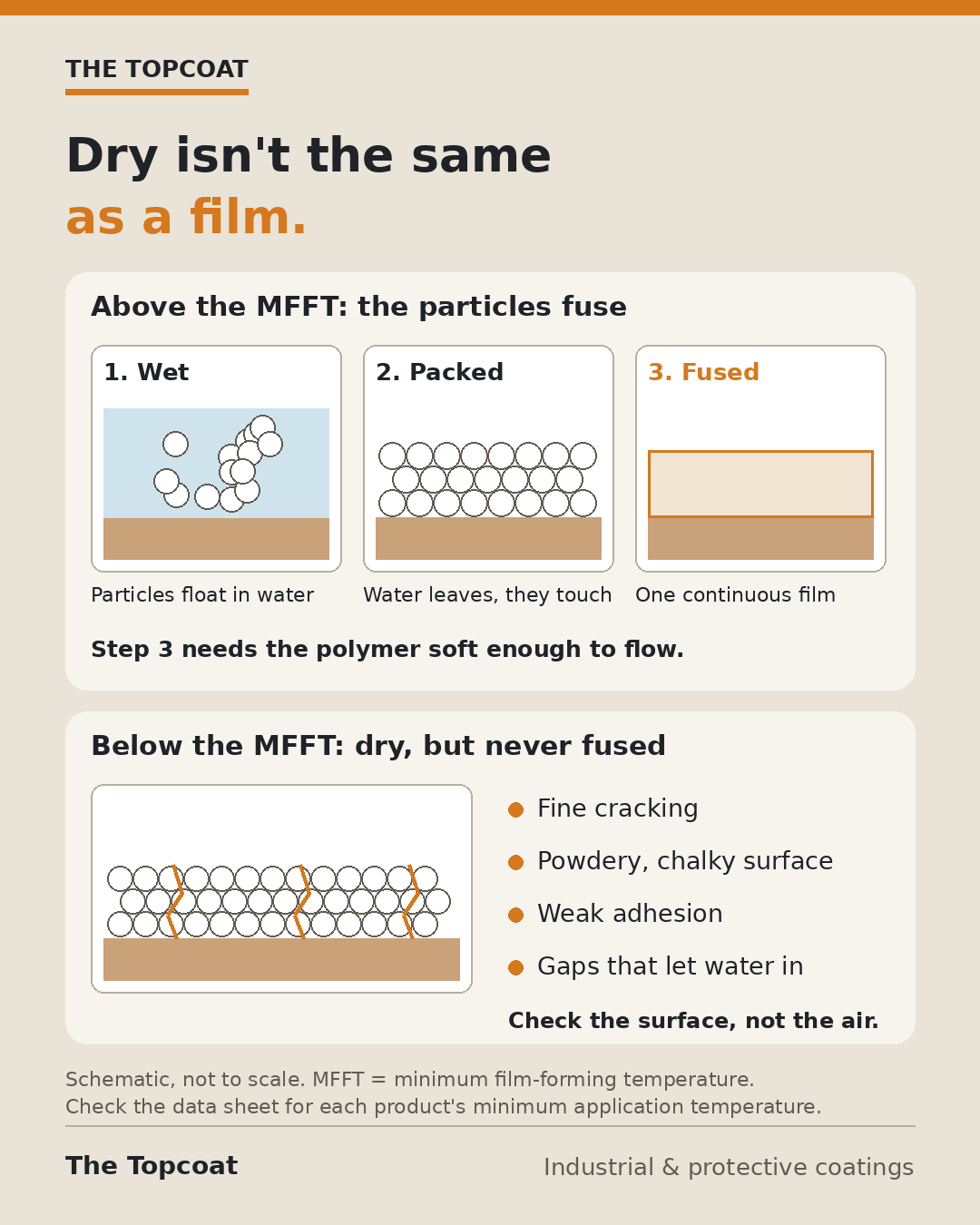
As the outdoor painting season closes in much of Europe, a common mistake happens with waterborne finishes on windows, doors, cladding and decking.
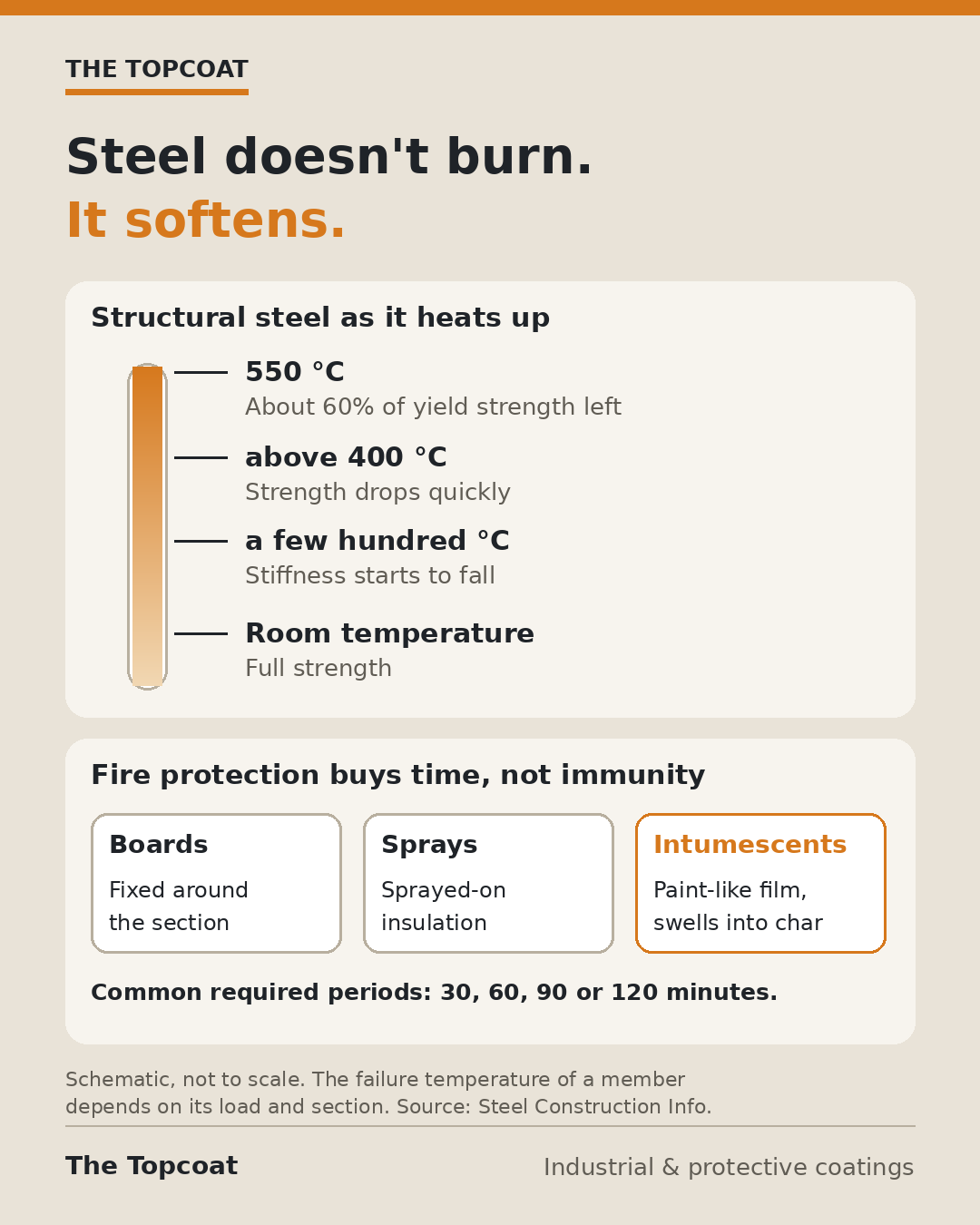
Structural steel is non-combustible. It won't catch fire and it won't feed one. So people are often surprised to see steel beams and columns boxed in with boards or…
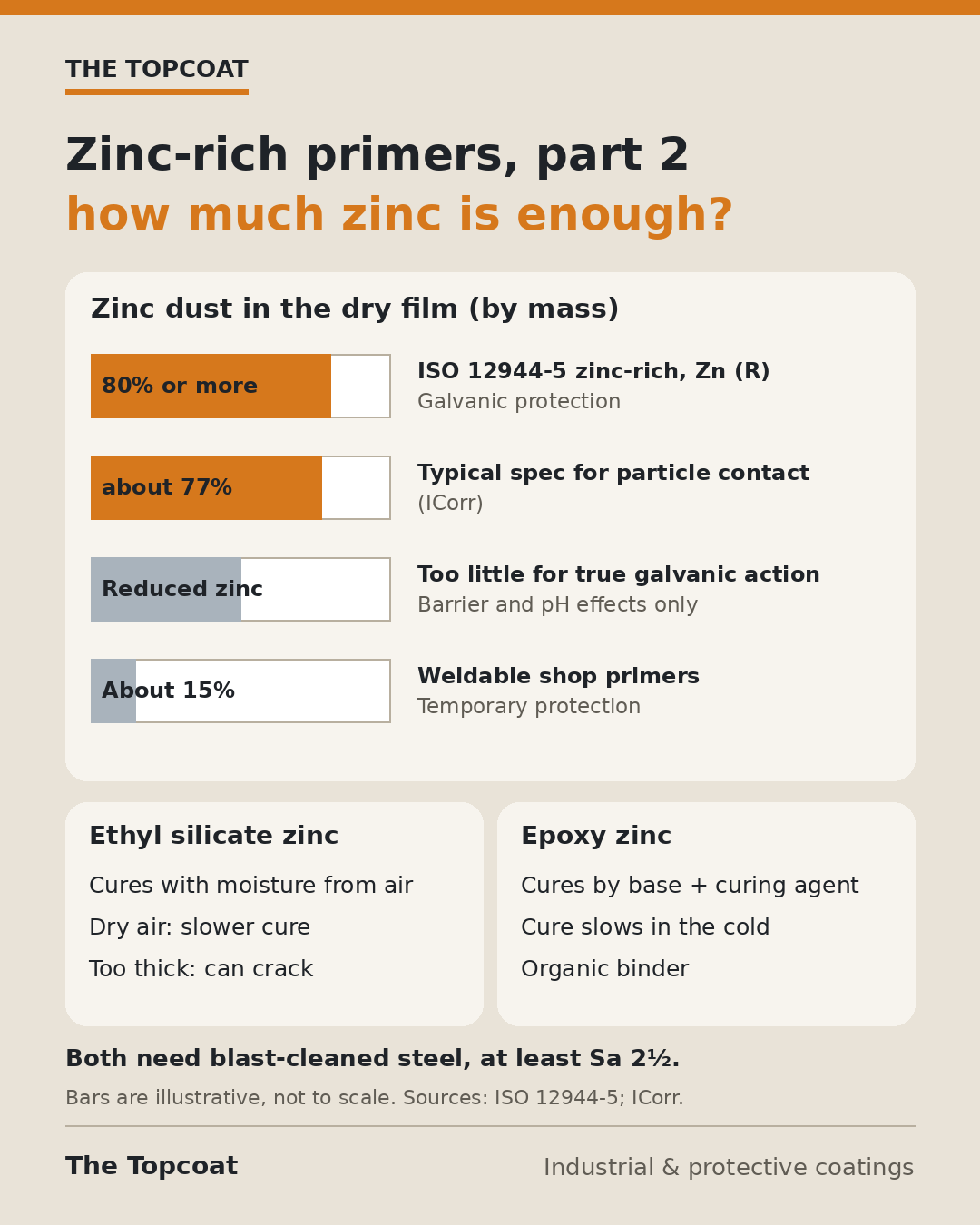
Zinc only protects steel if the particles touch each other and the metal. Too little zinc and they don't. Too much and the film falls apart.
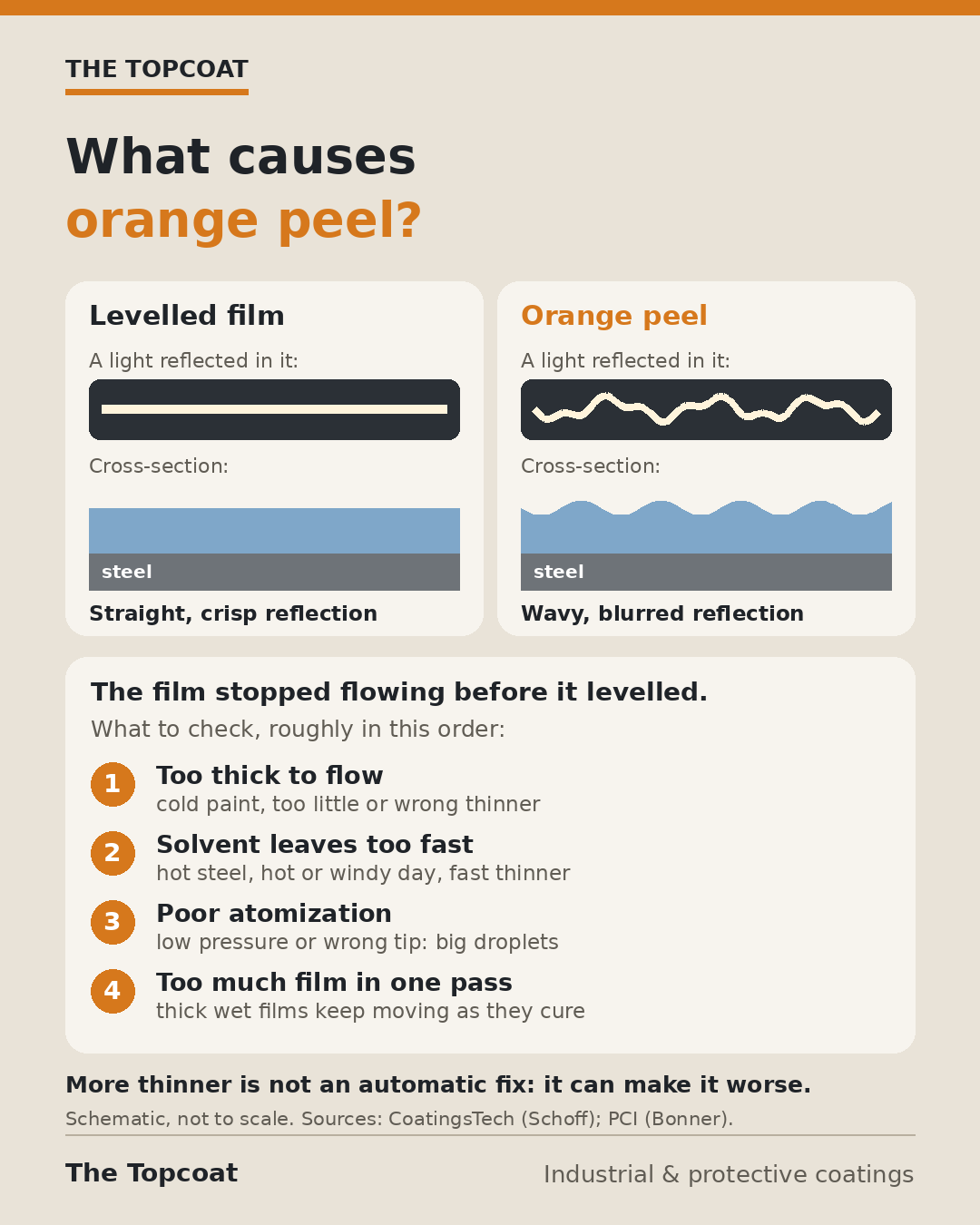
Orange peel is a coating surface that looks like the skin of an orange: a field of small, smooth bumps instead of a flat film. It's one of the most common things people…
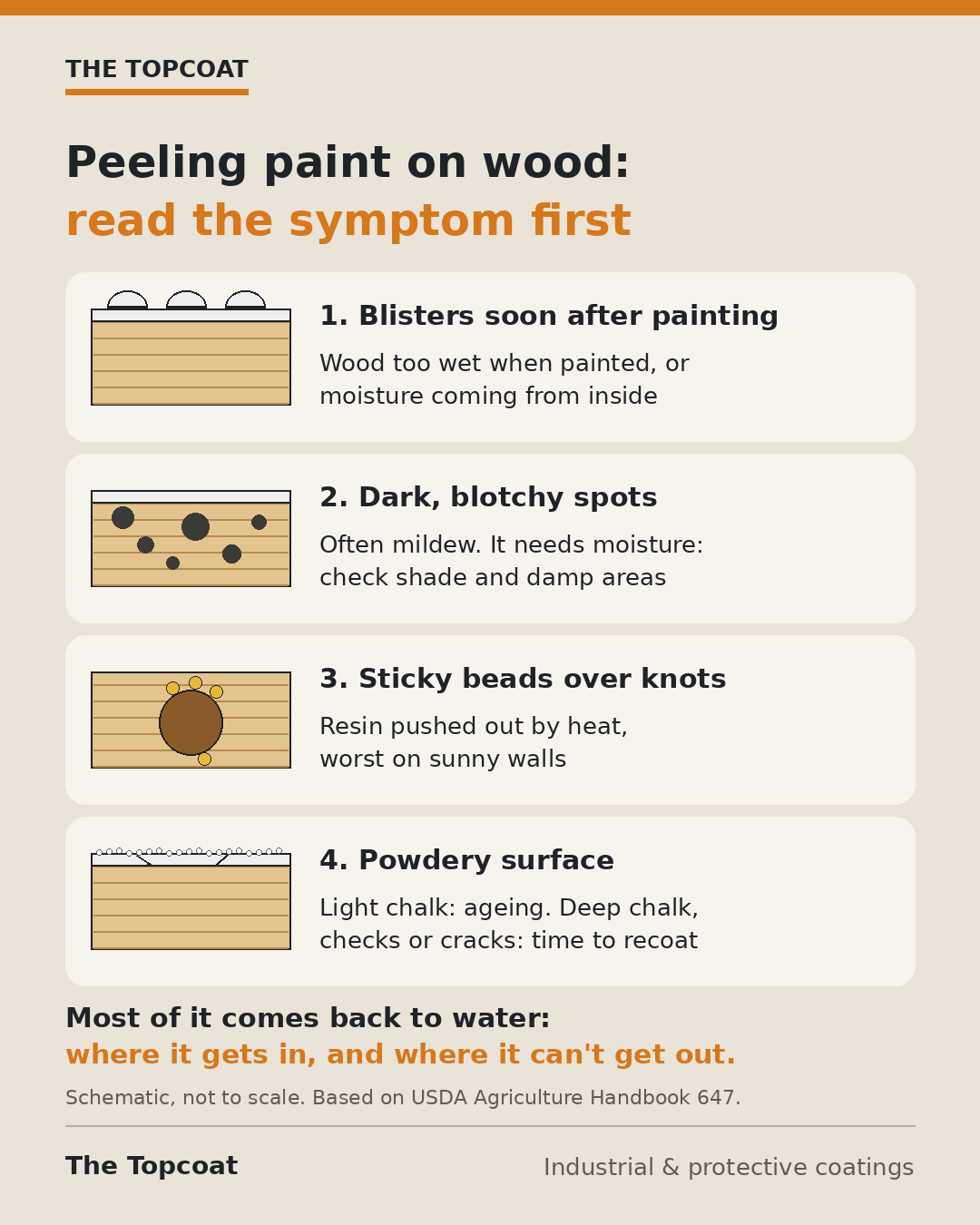
Paint failing on a timber wall is a symptom, not a diagnosis. What it looks like tells you where to look.
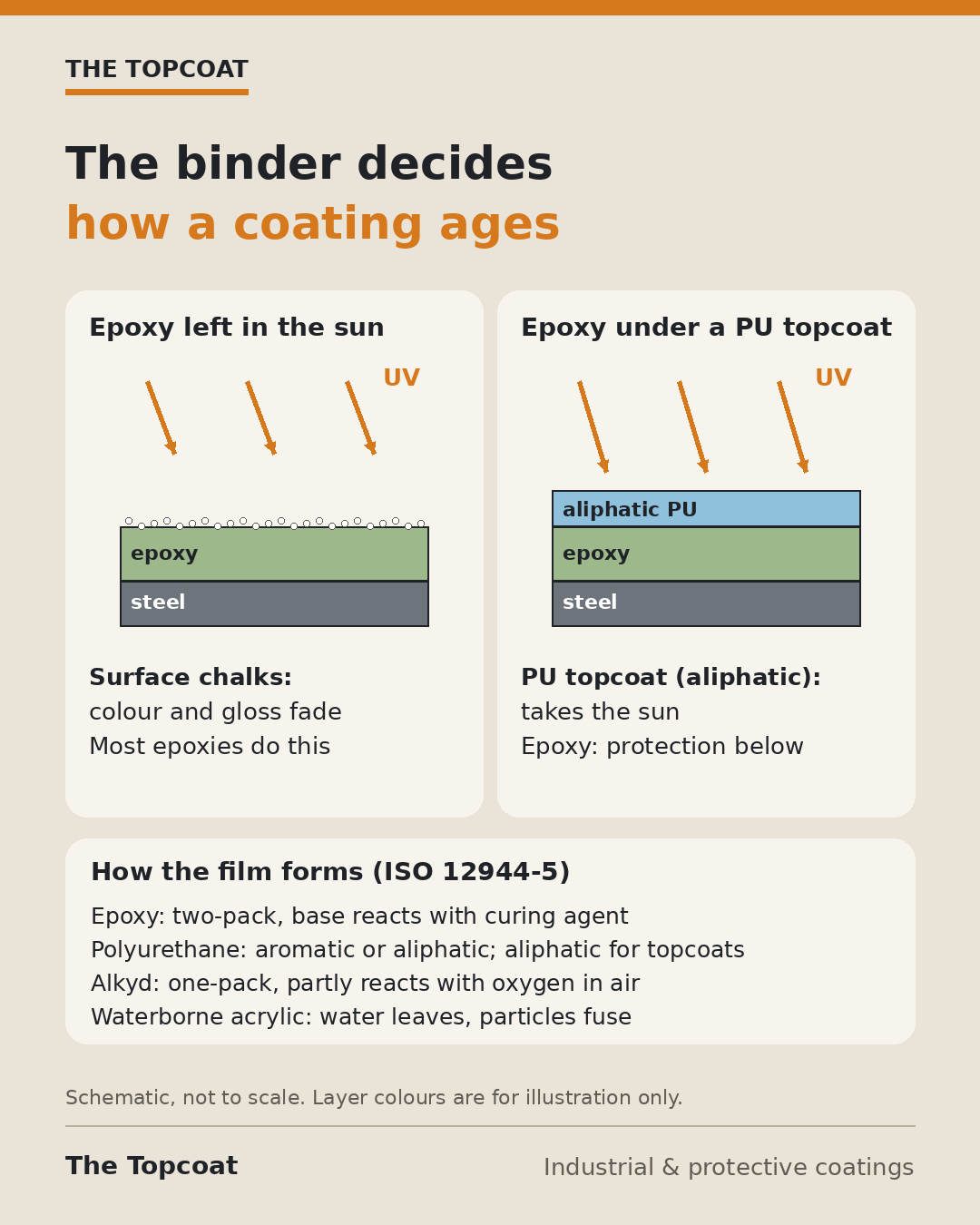
Why do so many steel specs put an epoxy underneath and a polyurethane on top?
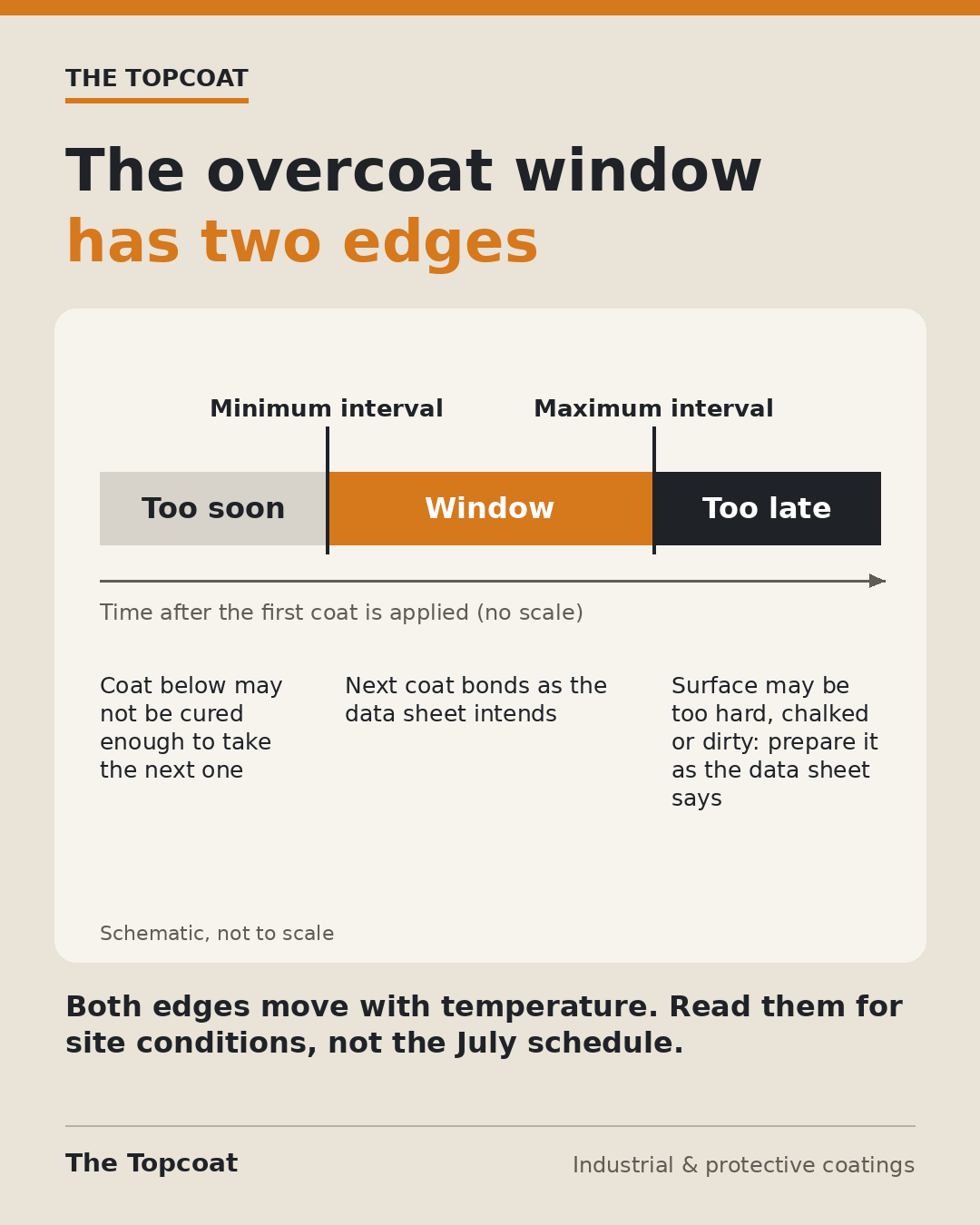
Picture a topcoat peeling off in clean sheets. The coat underneath looks almost untouched. No rust, no blisters. The two layers just never really bonded.
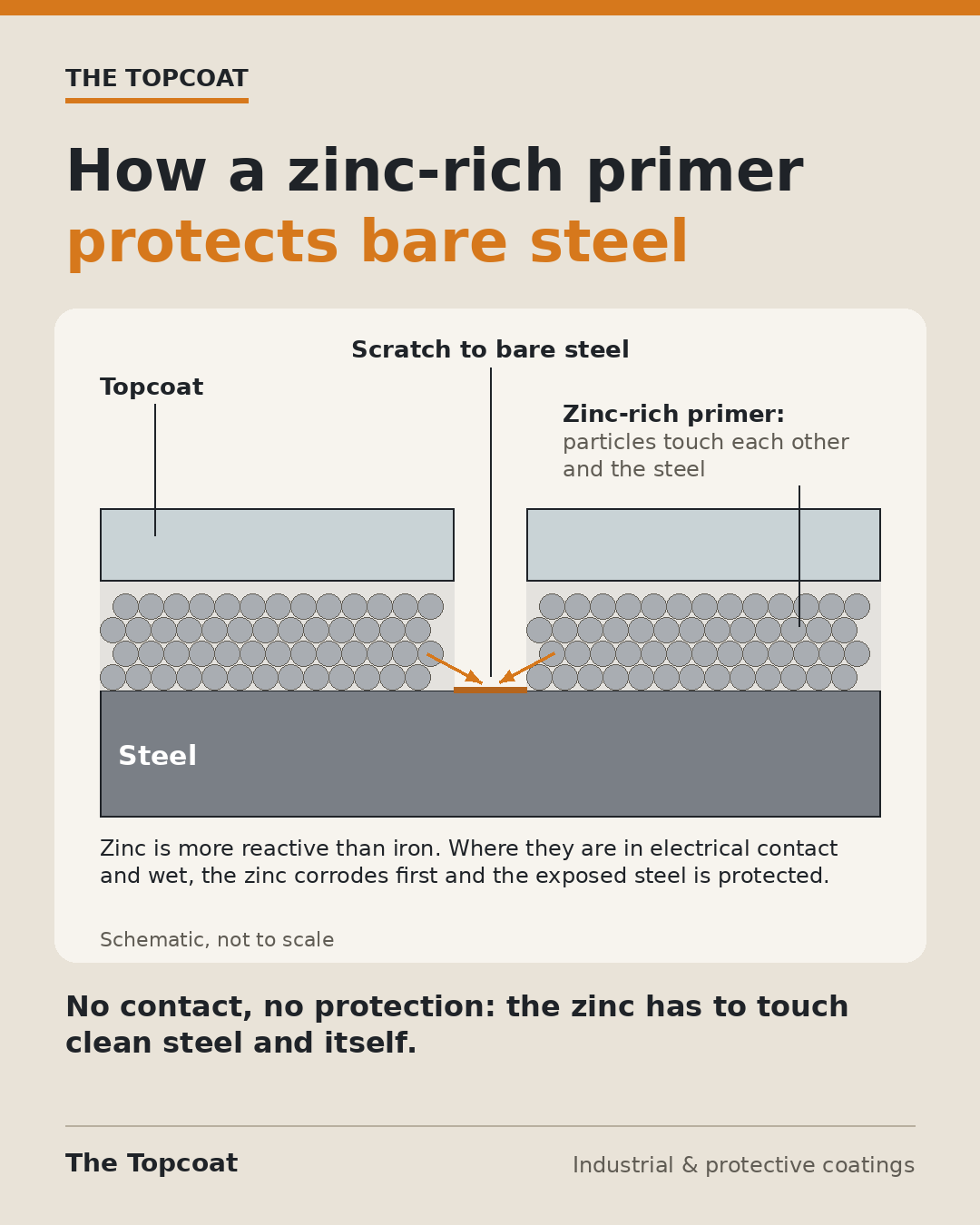
Scratch through most paint to bare steel and rust starts at the scratch. A zinc-rich primer is designed to fight back. The chemistry is surprisingly simple.
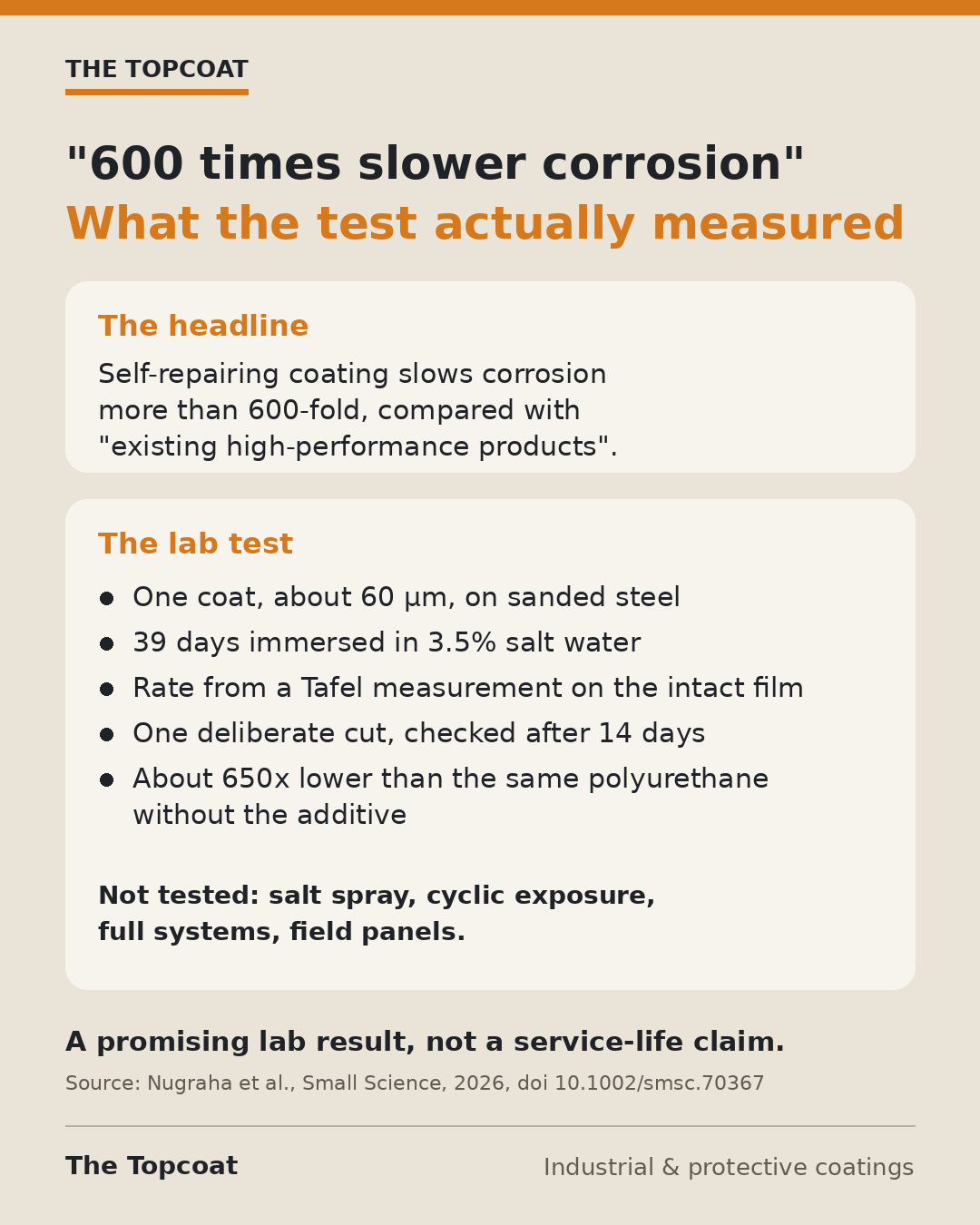
"Self-repairing coating slows corrosion more than 600-fold."
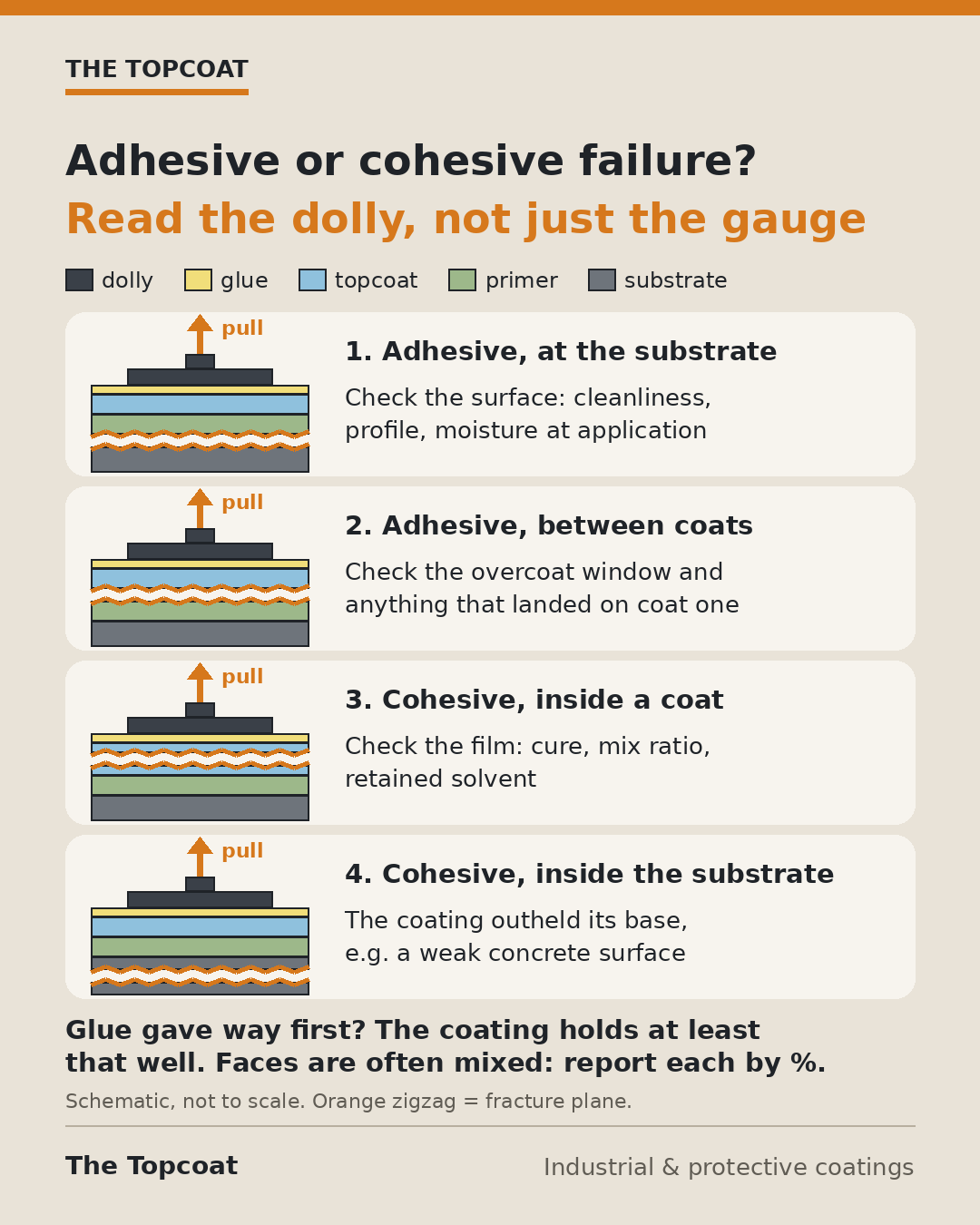
Two pull-off tests can give the same number and very different news. On the first dolly the coating came away clean, and the bare substrate is looking back at you. On…
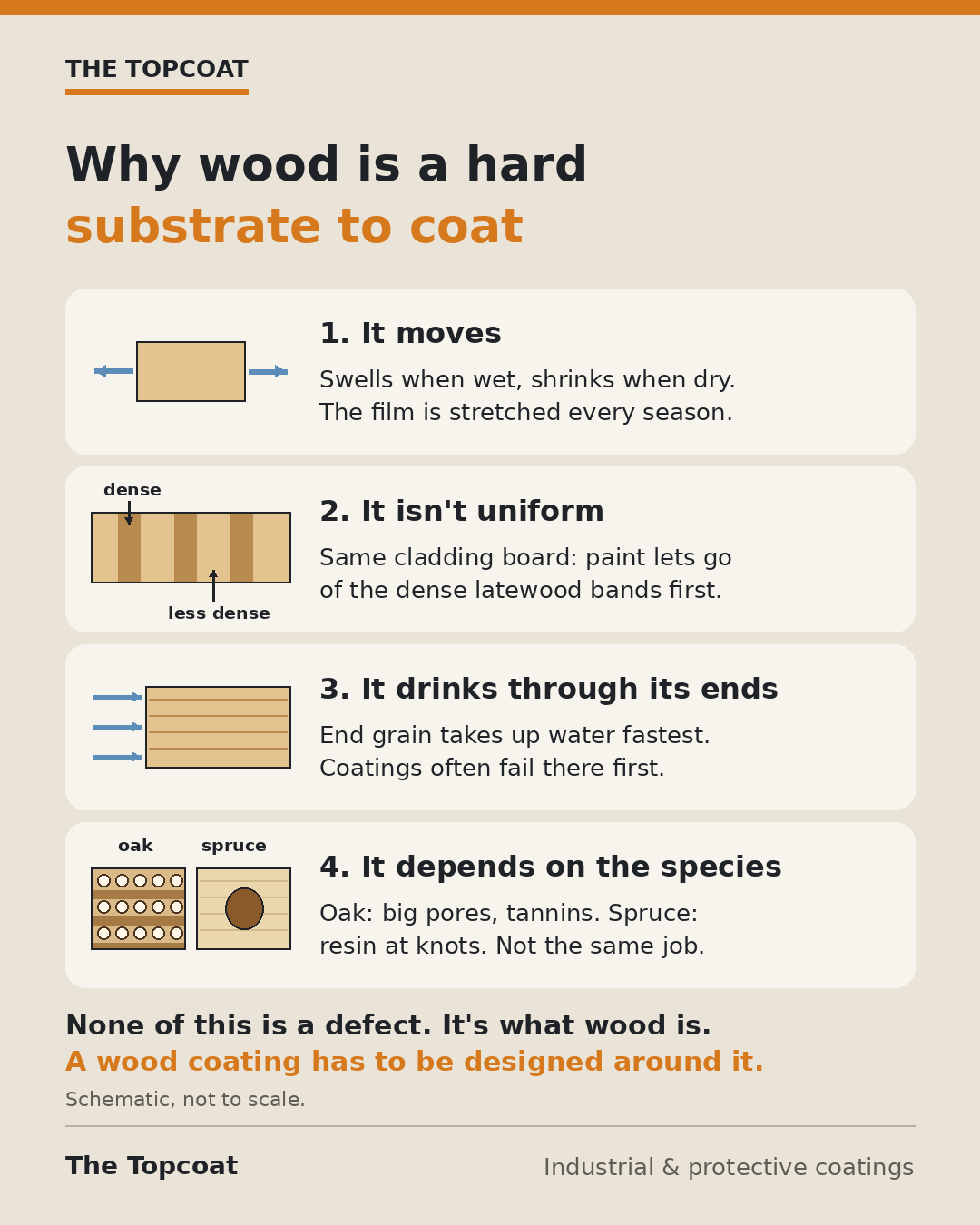
Steel is the same in every direction. Wood isn't, and every coating on it has to live with that.
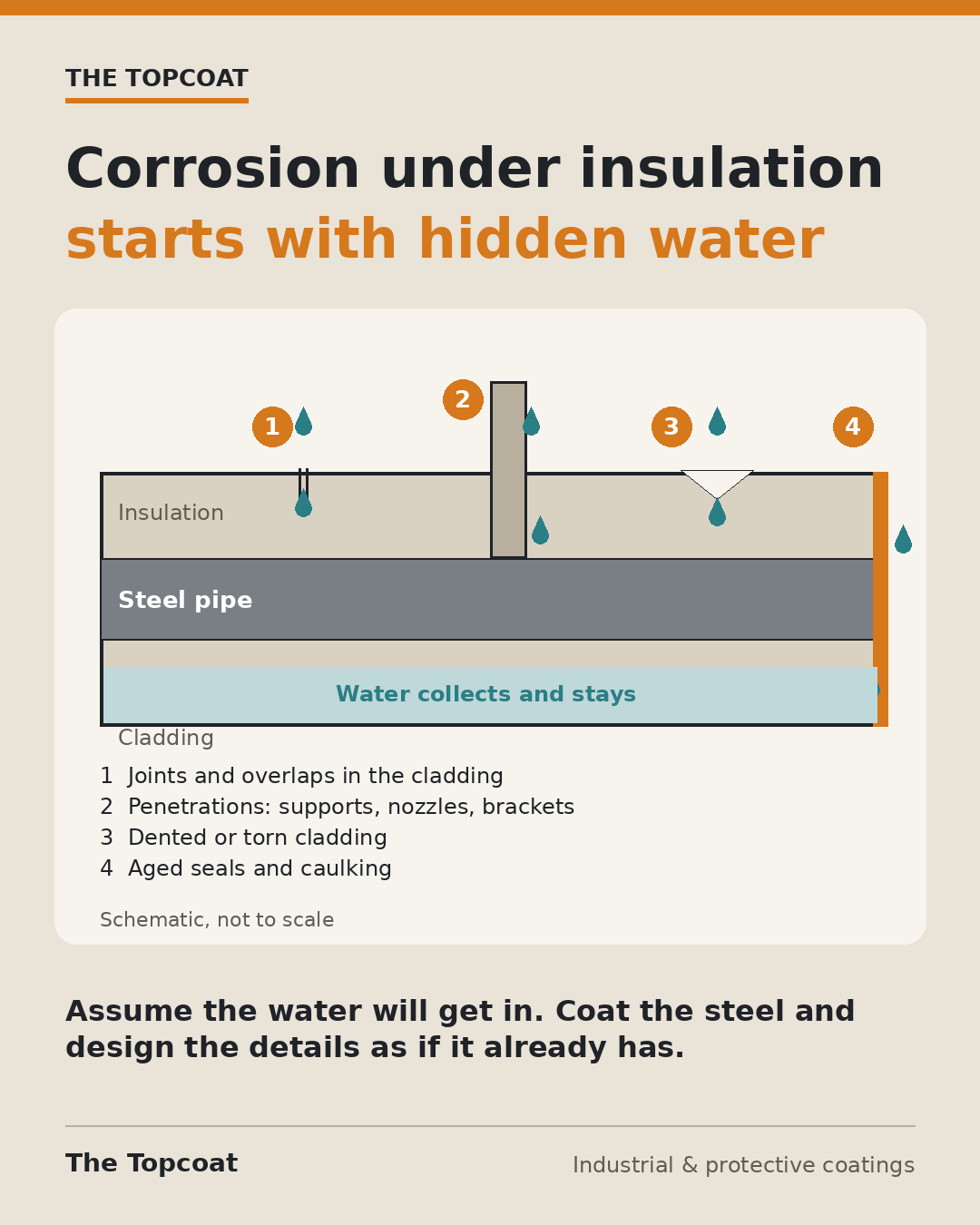
Strip the cladding off a length of old insulated pipe and the steel underneath can look fine for metres. Then, suddenly, it doesn't.
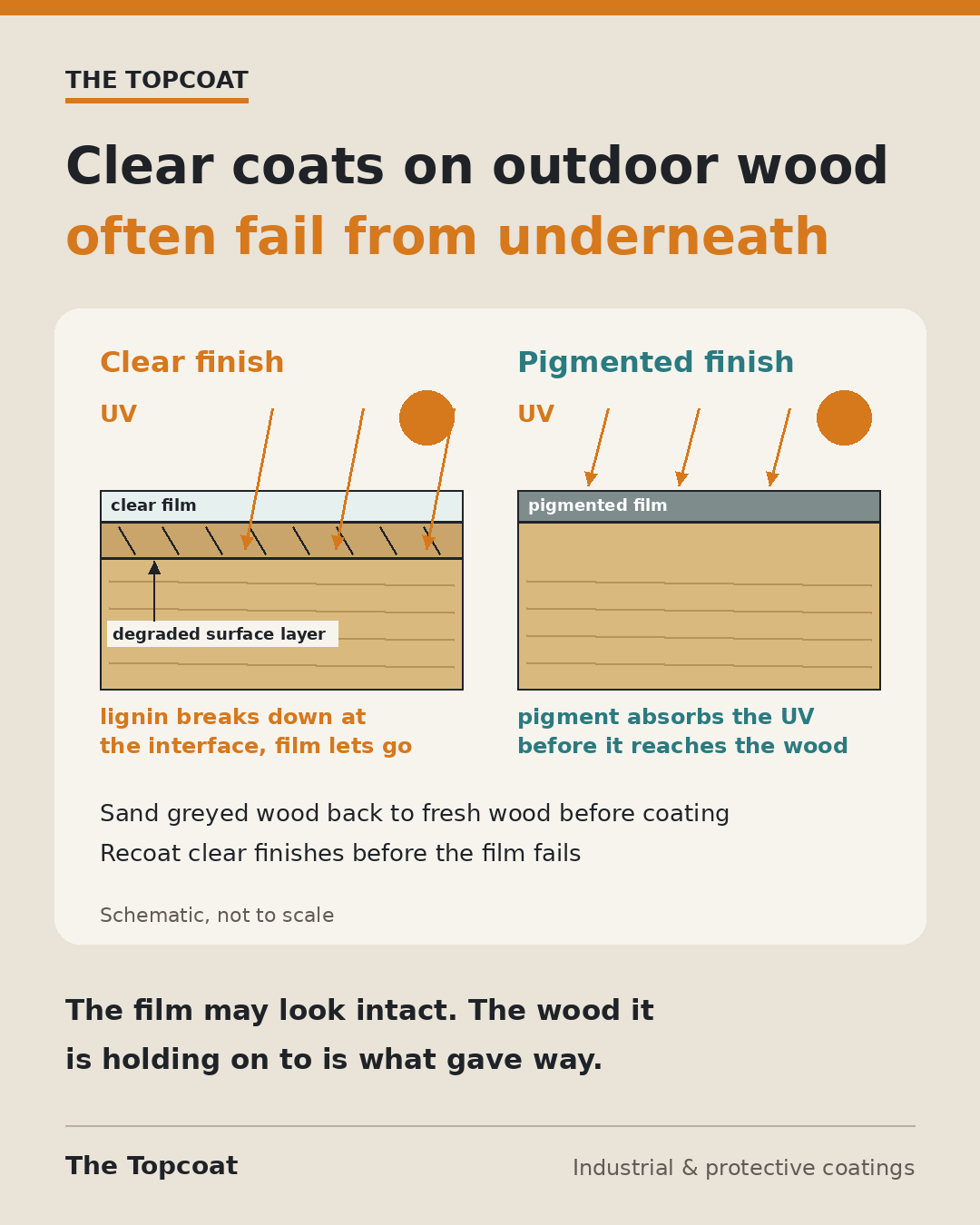
Why does clear varnish on an outdoor door look fine for a couple of summers, then come away in flakes?
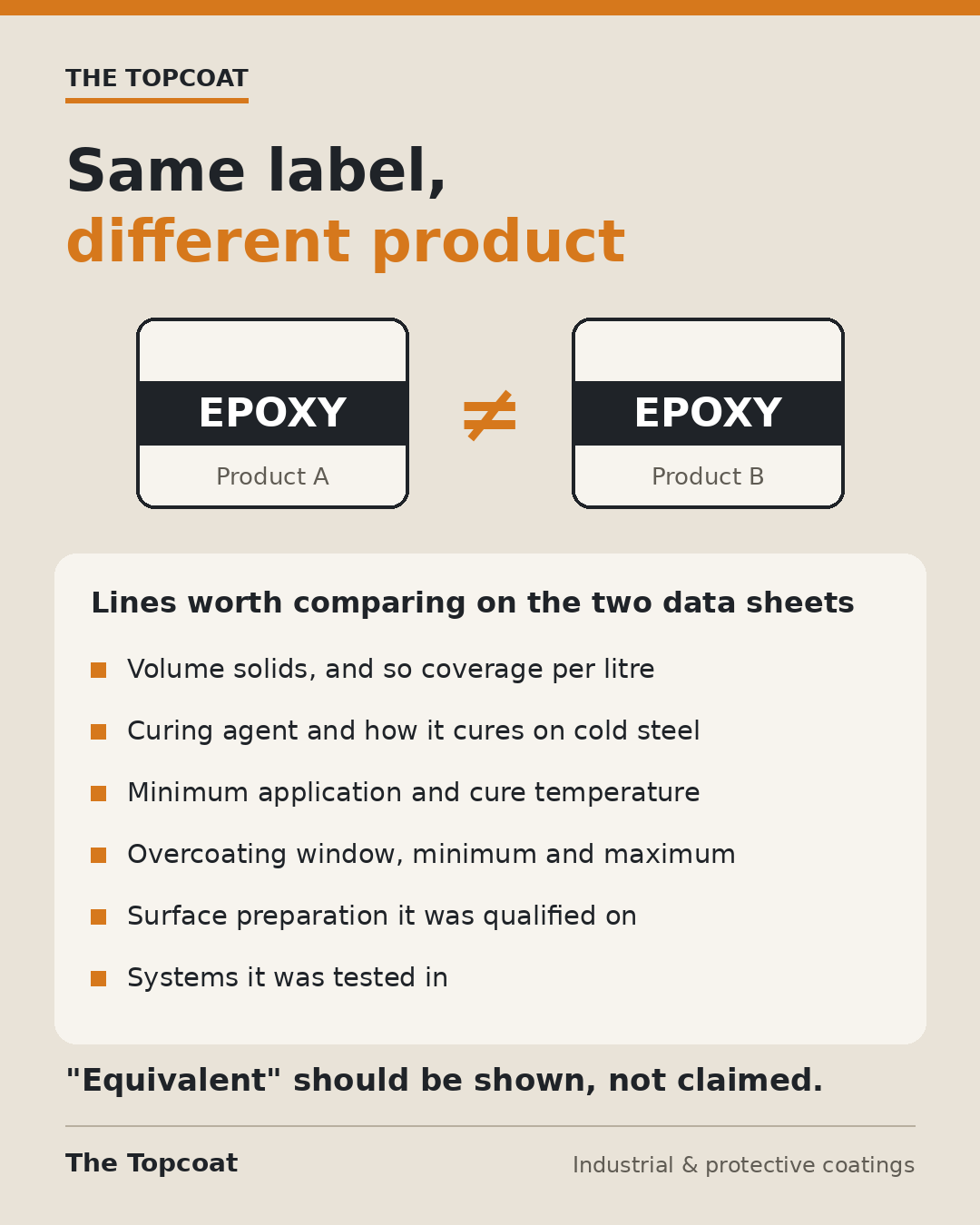
"It's an epoxy, so it's equivalent."
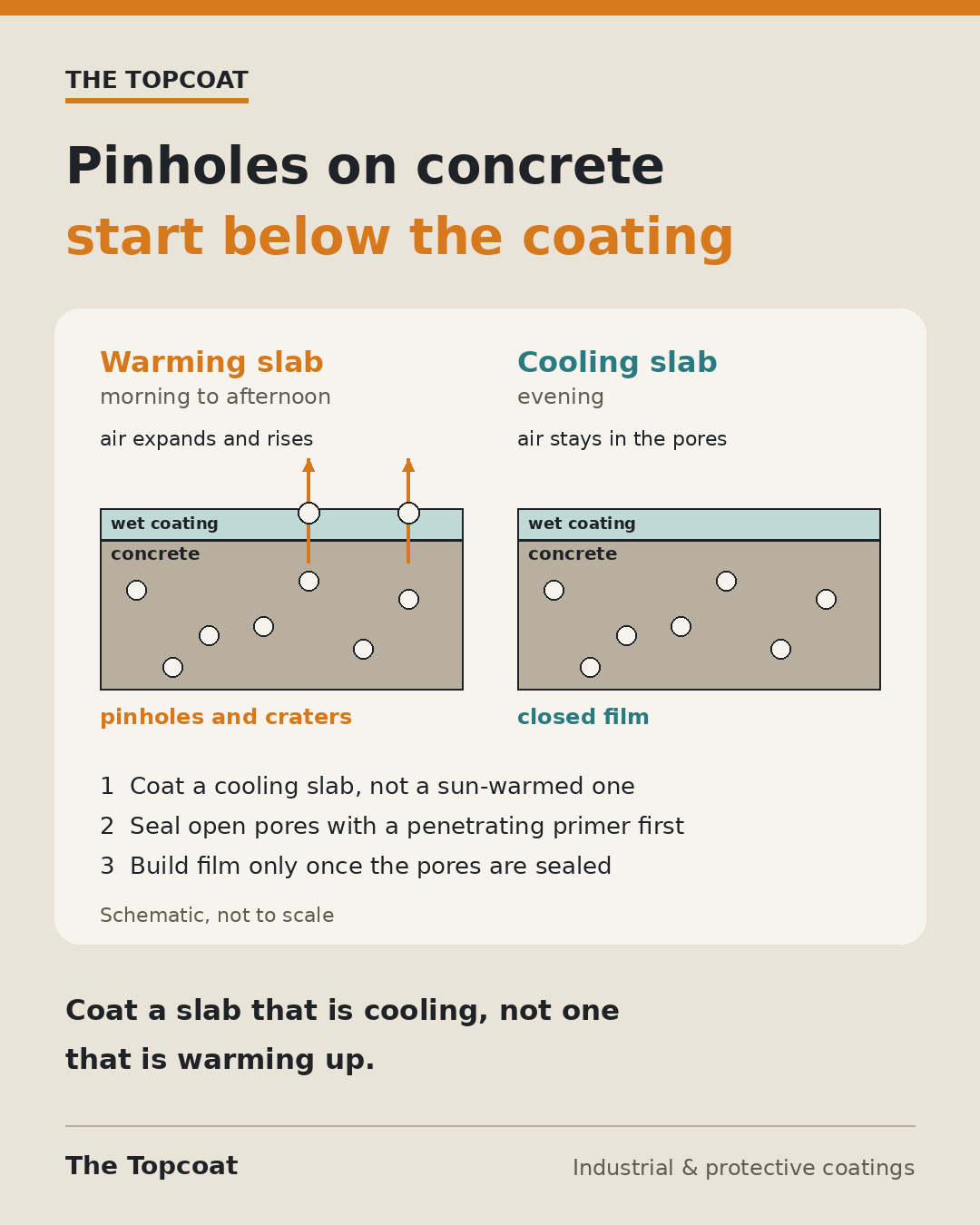
Concrete breathes. Coat it while it's breathing out and the film will show it.
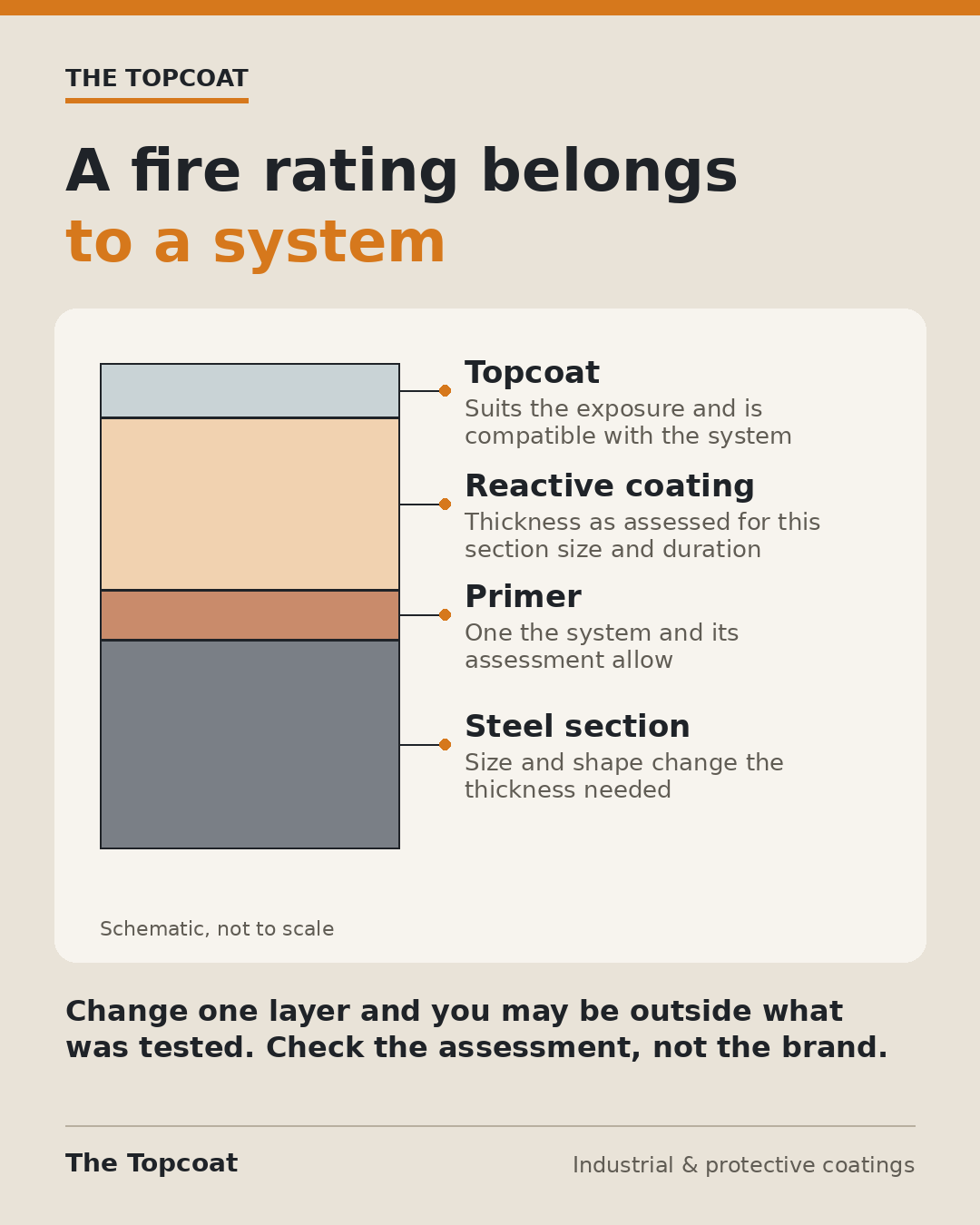
"This product is rated for 60 minutes."
