
Peeling paint on wood: read the symptom first
Paint failing on a timber wall is a symptom, not a diagnosis. What it looks like tells you where to look.
A short field guide, built on the USDA handbook on finishing wood exteriors (Agriculture Handbook 647):
-
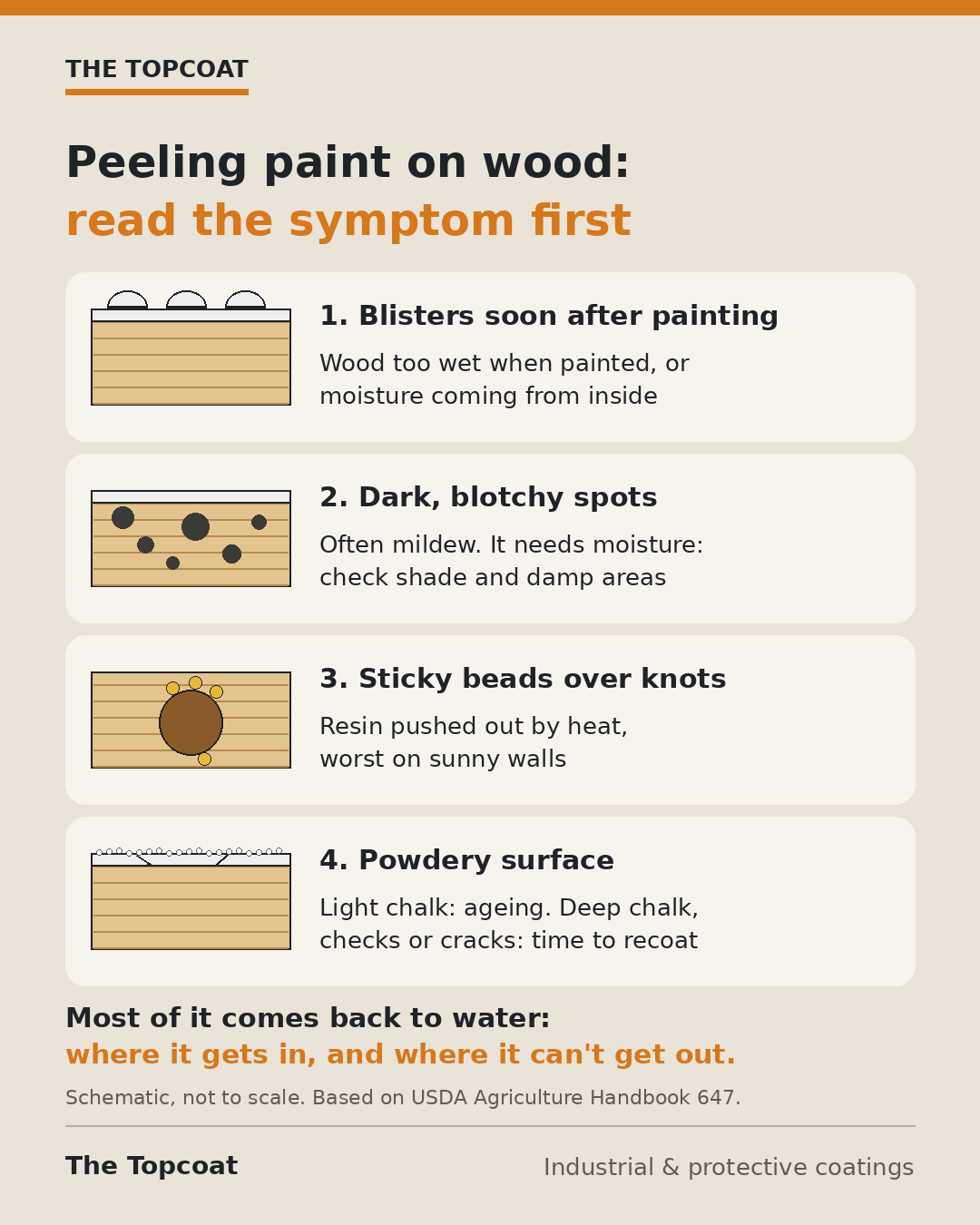
Blisters or peeling soon after painting. The wood was probably too wet. The handbook says blistering and peeling are likely if the moisture content is above 20 percent when it's painted. On a heated building, also think about moisture moving out through the wall from inside.
-
Dark, blotchy spots. Often mildew. It needs a steady supply of moisture, so look at shade, splash zones and surfaces that never quite dry.
-
Sticky beads or blisters over knots, worst on sunny walls. That's resin. When the sun heats the wood, it can push through the coating or lift it.
-
A powdery surface. Some chalking is just ageing. If rubbing it off shows sound film underneath, the paint is still doing its job. Deep chalking, checking or cracking means it's time to recoat.
Clear finish coming off in flakes? That's the UV and lignin story from my post on clear coats.
Most of this comes back to water: where it gets in, and where it can't get out.
General information. The project specification and the product data sheet set the requirements for your job.