
Clear coats on outdoor wood fail from underneath
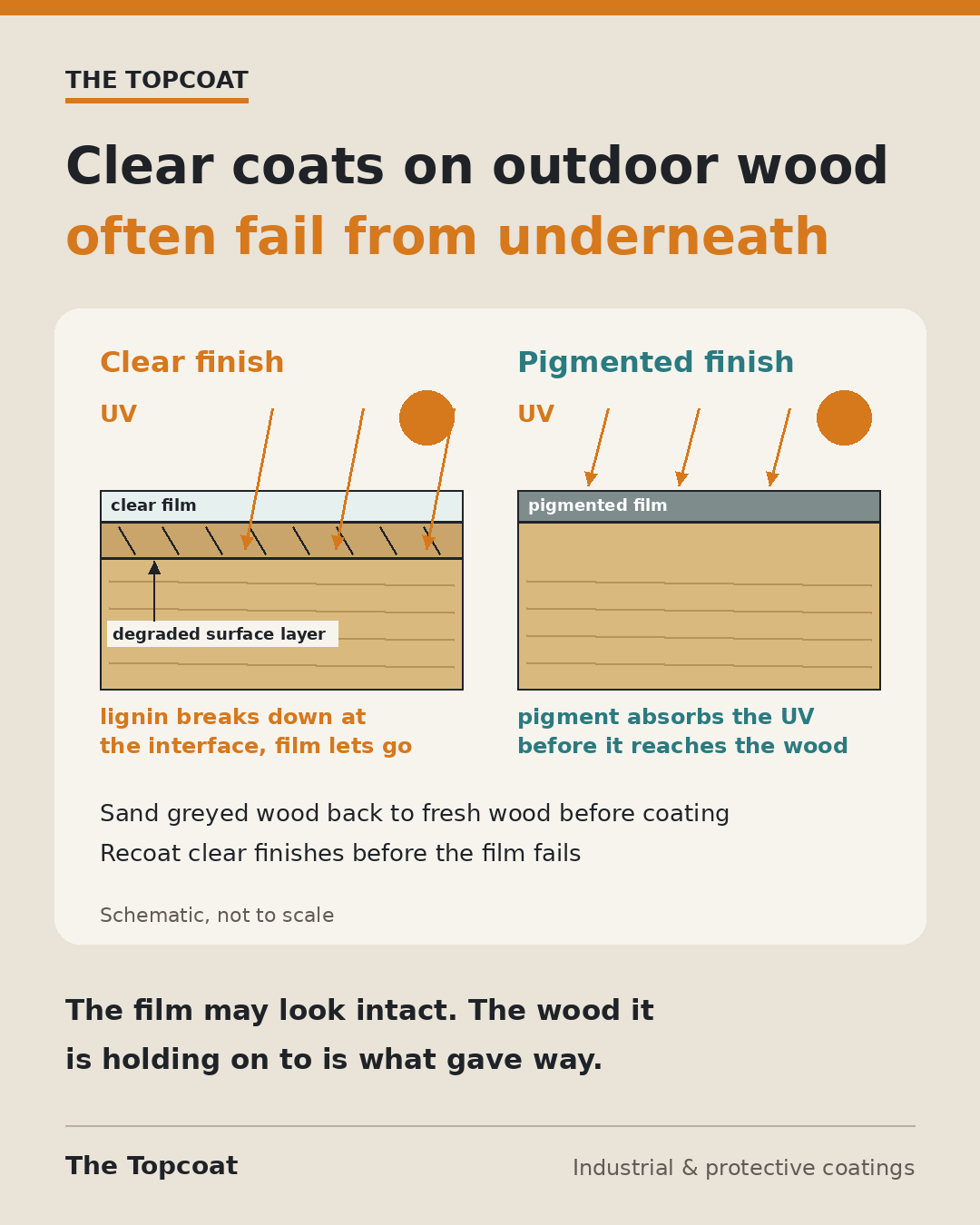
Why does clear varnish on an outdoor door look fine for a couple of summers, then come away in flakes?
Often the varnish isn't what failed. The wood underneath it did.
A clear film is meant to let light through. Some of the UV gets through too, and it attacks lignin, the polymer that binds wood fibres together. The top layer of wood under the film slowly breaks down. The coating can still be in one piece, but it's now holding on to a surface that's falling apart.
A 2025 review in BioResources pulls together lab work showing exactly this: lignin degrading right at the coating interface on weathered, coated wood, leaving the film easier to detach.
Paint and solid stains suffer much less from this, because the pigment soaks up the light before it reaches the wood.
In practice: 1. Clear exterior finishes depend on UV absorbers and need recoating sooner than paint.
-
Don't coat wood that has already greyed in the sun. Sand back to fresh wood first, since pre-weathered surfaces give weaker adhesion.
-
Recoat while the film is still intact, not after it starts lifting.
The principle isn't unique to timber. Any time a clear coat sits on a substrate that UV can damage, look at the interface first.
If you specify exterior timber finishes: do clients still ask for clear, or have most moved to tinted?
General information. The project specification and the product data sheet set the requirements for your job.