
How a zinc-rich primer protects bare steel
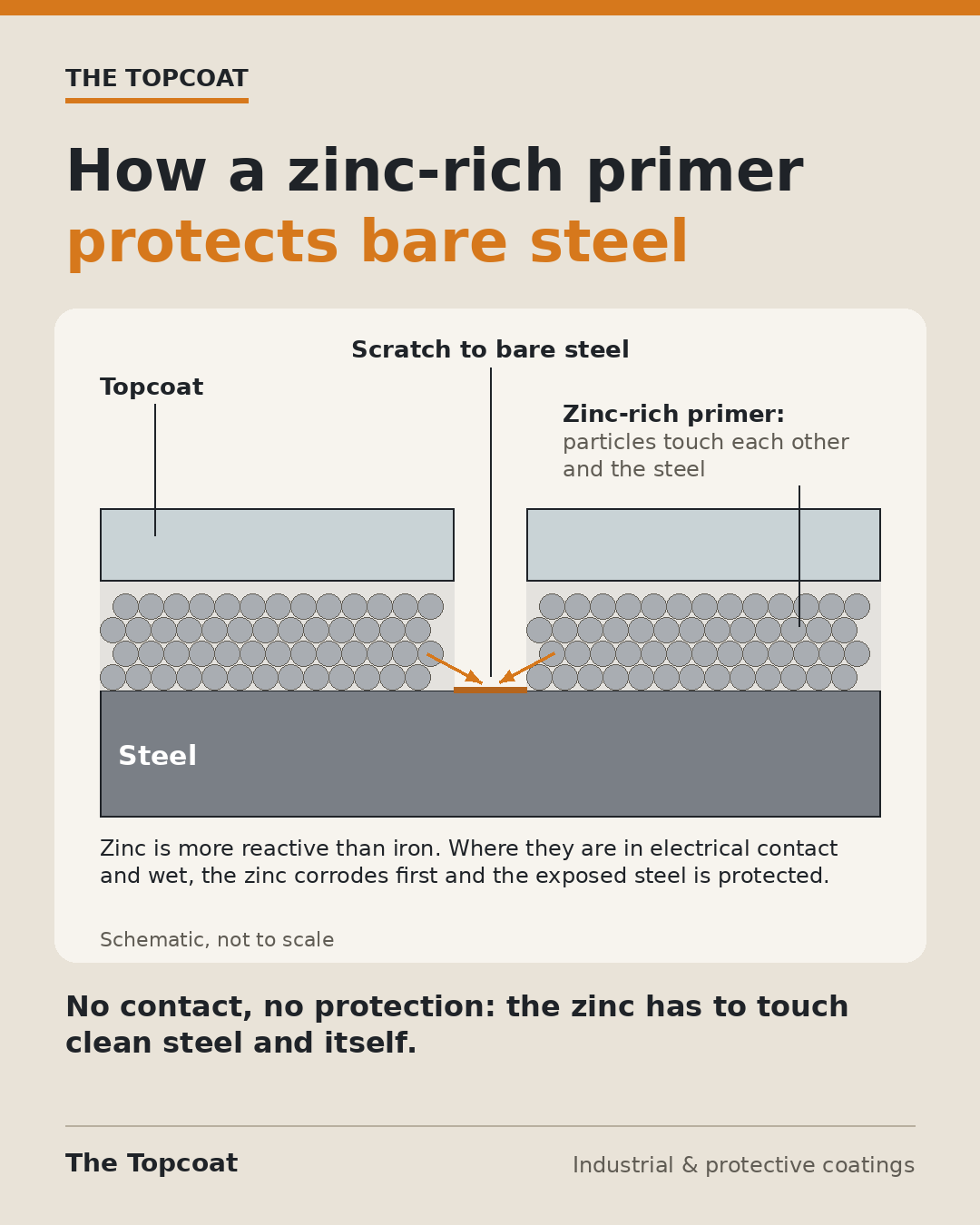
Scratch through most paint to bare steel and rust starts at the scratch. A zinc-rich primer is designed to fight back. The chemistry is surprisingly simple.
Zinc is more reactive than iron. Put the two in electrical contact, add water, and the zinc corrodes first. The steel becomes the protected side of the cell. Galvanizing works on the same principle.
The catch is the words "electrical contact". A zinc-rich primer is mostly zinc dust by weight in the dry film, packed so the particles touch each other and the steel. Too little zinc, or zinc wrapped up in binder, and that conducting path breaks.
That's why standards define "zinc-rich" with a minimum zinc content. ISO 12944-5 and SSPC-Paint 20 both do, but they don't draw the line at the same place or in the same way. The project specification tells you which one applies.
There's a second effect too. As the zinc corrodes, its corrosion products can fill pores in the film and add a bit of barrier.
A few practical consequences:
-
The primer only works if it's on clean, well-prepared steel.
-
"Zinc primer" on a label doesn't always mean zinc-rich. Reduced-zinc products exist, and they rely more on barrier effects.
Sources: Institute of Corrosion "Ask the Expert" series, ISO 12944-5, and SSPC: The Society for Protective Coatings. See also Jebin Antony's recent post on this.
General information. The project specification and the product data sheet set the requirements for your job.