
CUI: where the water actually gets in
Strip the cladding off a length of old insulated pipe and the steel underneath can look fine for metres. Then, suddenly, it doesn't.
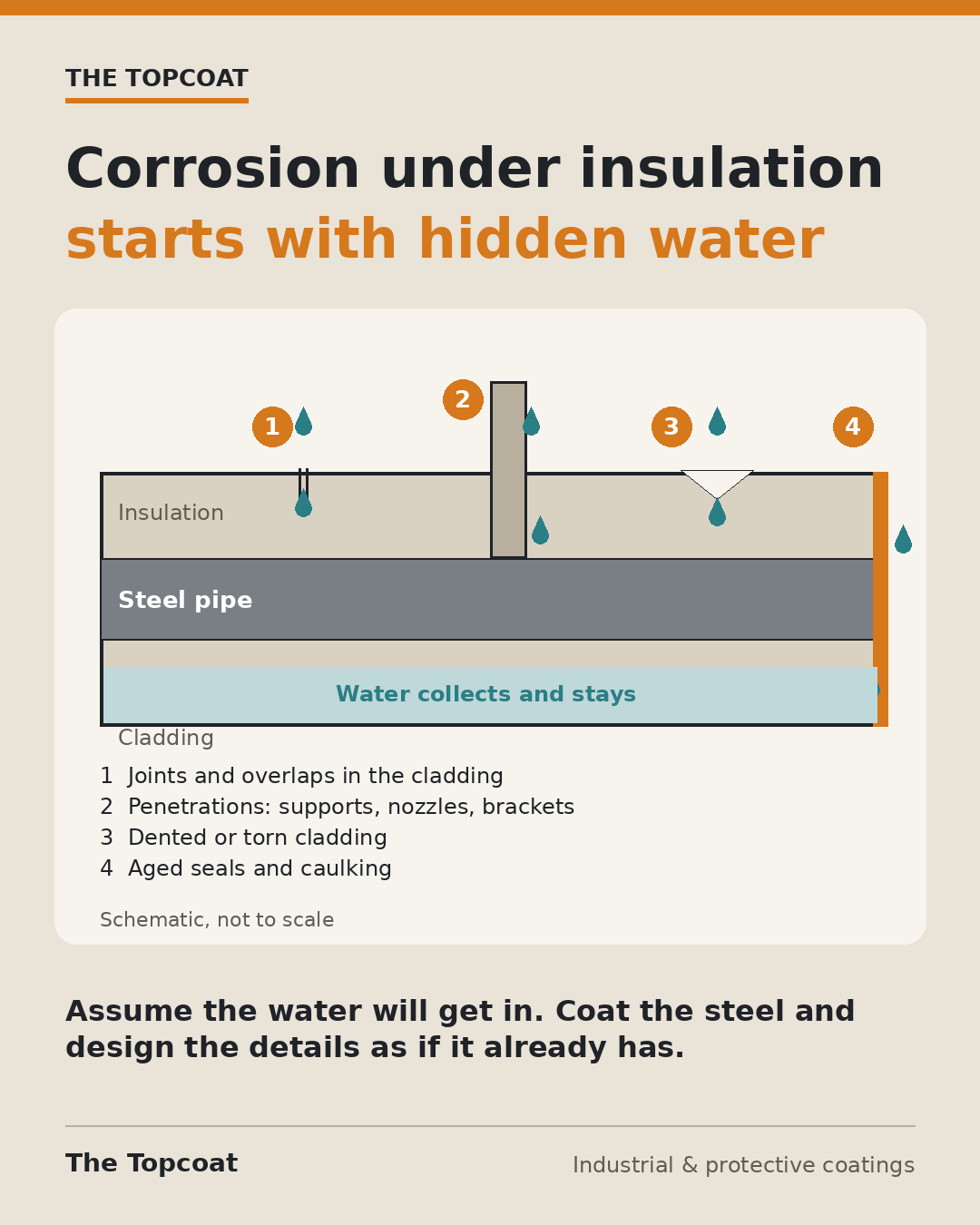
That's what makes corrosion under insulation so frustrating. The damage sits where nobody looks, and the cause is nearly always the same: water got in and couldn't get out.
It doesn't need a dramatic route. The usual ones are boring: 1. Joints and overlaps in the cladding 2. Penetrations, where supports, nozzles and brackets break the jacket 3. Cladding that's been dented, torn or stood on 4. Seals and caulking that have simply aged
Once inside, the insulation holds that water against warm steel. Add some thermal cycling and the wet layer can sit there for years.
NACE SP0198, now published by AMPP, frames CUI as a systems problem. Design, insulation and coatings work together, and none of them does the job on its own. A coating on the steel under the insulation is one of the main lines of defence, because keeping water out completely for decades isn't realistic. Inspection has limits too. Nobody strips every metre of insulation to look.
My view: assume the water will get in, and specify the coating and the details as if it already has.
Which penetration detail causes you the most trouble on site?
General information. The project specification and the product data sheet set the requirements for your job.