
Same label, different product
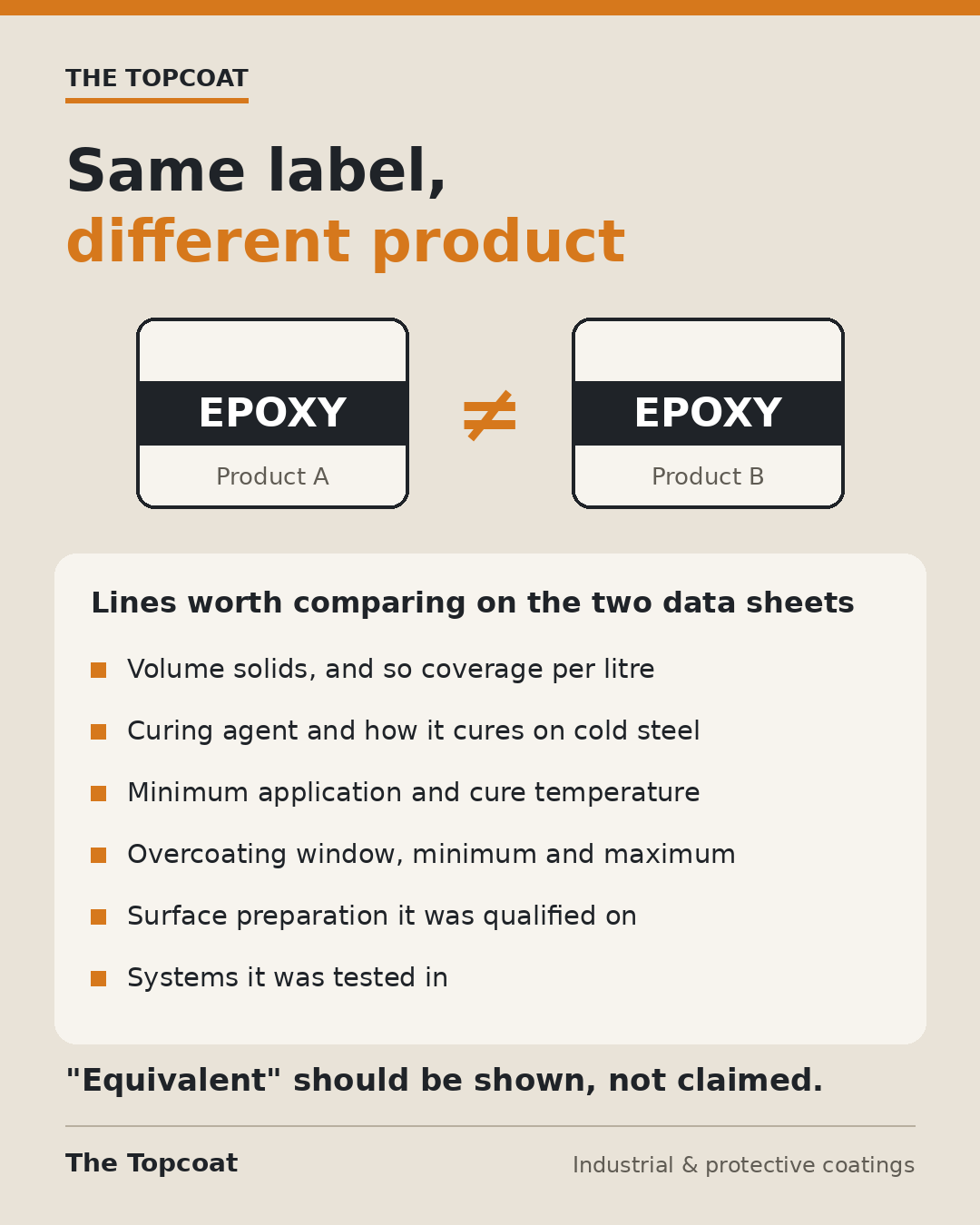
"It's an epoxy, so it's equivalent."
"Epoxy" tells you the binder family. Not much else. Two products in the same family can differ in nearly everything that matters once the steel is in front of you.
-
How much of the wet paint actually ends up as dry film, which sets how far a litre goes.
-
Which curing agent is in there, and how it behaves on cold steel in November.
-
The lowest temperature it can be applied at and still cure properly.
-
How long you have before the next coat, and what you have to do if you miss that window.
-
What surface preparation it was qualified on.
-
Which systems it was actually tested in.
None of that is on the drum in big letters. Almost all of it is on the data sheet, if you read past the first page.
So when a swap gets proposed, I'd put the two data sheets side by side and go line by line. If the original was qualified as part of a system, ask whether the substitute was tested in that same system. Same family name doesn't count as evidence.
It's tedious. It's also a lot cheaper than finding out on the structure.
General information. The project specification and the product data sheet set the requirements for your job.